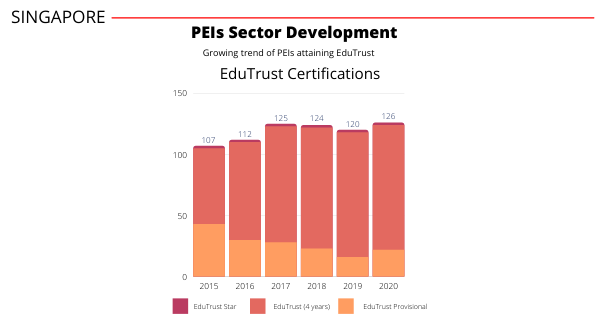
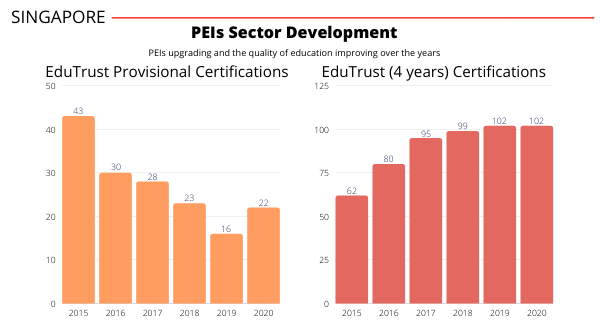
A strong QA department ensures continuous compliance with the Enhanced Registration Framework (ERF) and the EduTrust Certification Scheme. It safeguards the institution’s reputation, minimises operational risks, and significantly enhances student satisfaction and institutional trustworthiness.
However, establishing a consistently high-performing internal QA department comes with inherent difficulties. Staff turnover, limited expertise, and competing operational priorities often disrupt the effectiveness and continuity of internal compliance efforts. Additionally, internal QA teams might lack the objectivity required to critically evaluate their own institutional practices.
Key Components of a Robust QA Department

A robust QA department is essential for Private Education Institutions (PEIs) in Singapore to meet the stringent mandatory registration requirements like the Enhanced Registration Framework (ERF) and aspiring for EduTrust certification scheme. At its core, a successful QA department is driven by strong leadership that thoroughly understands ERF standards and EduTrust certification scheme criteria, demonstrating a deep commitment to achieving and maintaining high educational standards and comprehensive support services. This leadership guides the institution’s strategic focus on delivering excellence and fostering continuous improvement.
Beyond leadership, robust academic systems are a critical component, providing the essential structure for systematic monitoring, evaluation, and continuous enhancement of educational services. This involves diligently tracking student and graduate outcomes, along with assessing the institution’s overall performance through data-driven quality assurance. A well-functioning QA department ensures all operational processes are meticulously aligned with the requirements set by SkillsFuture Singapore (SSG).
The Value of an External QA and Compliance Solution

To address the challenges associated with establishing an effective internal QA department, many PEIs in Singapore have opted to outsource their QA and compliance functions to professional firms. This approach offers the advantage of having a highly skilled and independent team dedicated solely to compliance, thereby ensuring stability and objectivity in education services. Outsourcing also helps ensure the effective provision of educational services and compliance with certification standards. Rather than diverting critical resources internally, outsourcing enables PEIs to remain focused on delivering quality education, a core tenet for any private education provider.
Why Do More Than Half of Singapore’s PEIs Choose EduValue?
Currently, more than half of all PEIs in Singapore partner with EduValue for QA and compliance management. The reasons for this widespread preference are clear:
1. Specialised Expertise and Consistency:
EduValue’s team of professionals has extensive, up-to-date knowledge of evolving EduTrust regulations and ERF standards. They provide reliable and consistent oversight, eliminating vulnerabilities arising from staff turnover or insufficient internal expertise. EduValue strives to help institutions achieve and maintain the highest standards of quality and compliance.
2. Operational yet Independent Approach:
Unlike purely consultative firms, EduValue actively integrates into a PEI’s operational framework. They collaborate closely with internal teams, effectively becoming a seamless part of the institution. This unique combination ensures unbiased, comprehensive monitoring while maintaining direct involvement in daily operational decisions, offering unparalleled support services.
3. Cost Efficiency and Reduced Risks:
Outsourcing QA and compliance to EduValue reduces the operational burden, allowing PEIs to allocate resources more efficiently. Institutions can significantly mitigate risks associated with non-compliance, audits, and regulatory sanctions, especially those under the purview of SkillsFuture Singapore.
4. Continuous Regulatory Updates:
With EduValue’s proactive monitoring of regulatory shifts, institutions remain consistently ahead of changes, maintaining continuous compliance and readiness for audits or inspections by regulatory bodies like SkillsFuture Singapore.
Regulatory Challenges Faced by Private Education Institutions (PEIs) in Singapore

In recent years, several Private Education Institutions (PEIs) in Singapore have encountered regulatory issues, resulting in enforcement actions by the SkillsFuture Singapore (SSG), which acts as a regulatory authority overseeing compliance. These actions have ranged from stern warnings to suspension of EduTrust certifications. For instance, James Cook University received a stern warning in September 2023 for failing to notify the SSG about changes to its Examination Board within the required 14-day timeframe (TPGateway, 2023). Additionally, institutions including Victory Life Christian School faced scrutiny for failing to timely notify the SSG of changes in ownership and academic governance (TPGateway, 2023). Collectively, these instances underscore the critical need for robust internal compliance frameworks to effectively navigate and manage regulatory expectations and uphold institutional credibility in the PEI sector (EduValue, 2023).
EduValue: Your Internal QA and Compliance Department
By partnering with EduValue, PEIs gain more than just an external consultant—they secure a dedicated QA and compliance team that functions as an integral internal department. EduValue’s involvement not only enhances compliance but fosters a proactive quality culture throughout the institution.
With EduValue as your internal QA and compliance partner, your institution gains peace of mind, allowing you to focus fully on educational excellence, confident in the knowledge that compliance and quality standards are consistently met.
References
• EduValue. (2023). The Decline of Private Education in Singapore – How to Work Against the Decline? Retrieved from https://eduvalue.com.sg/the-decline-of-private-education-in-singapore-how-to-work-against-the-decline/